
Kenya’s political landscape is rich and multifaceted, shaped by historical events and personalities that have left indelible marks on its governance and societal structure. Since gaining independence in 1963, Kenya has evolved from a single-party state to a vibrant multi-party democracy, marked by significant political transitions and reforms.
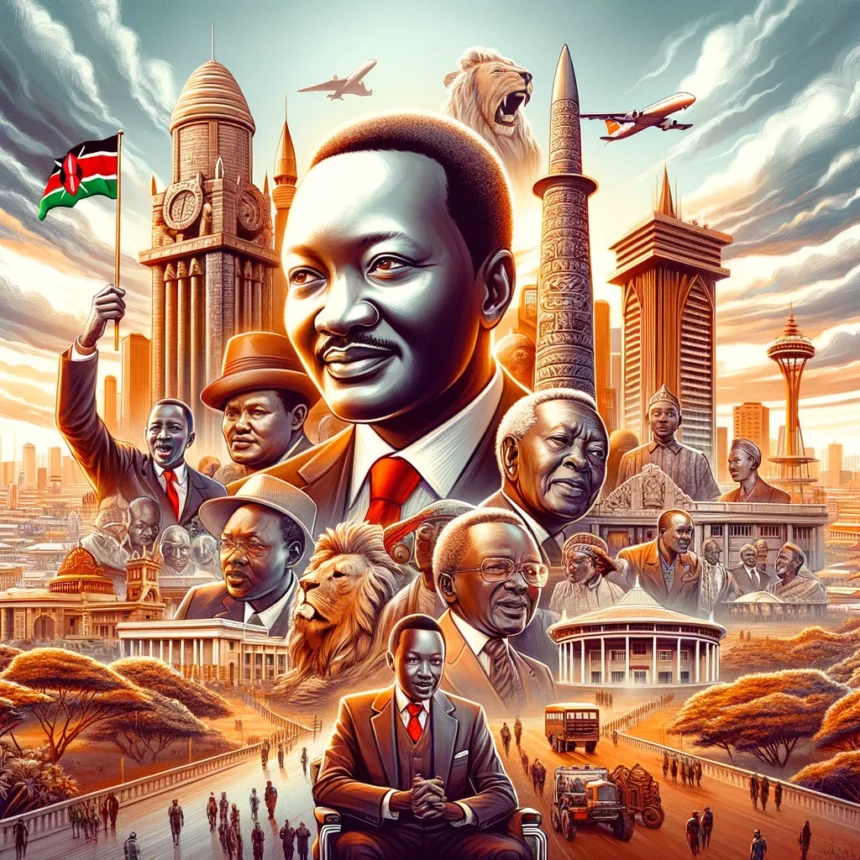
The journey began with Jomo Kenyatta, Kenya’s first President, who laid the foundation for the nation’s governance structure. His era was succeeded by Daniel arap Moi, whose 24-year presidency was characterized by a centralized power structure. The transition to multi-party democracy in the early 1990s marked a significant turning point, leading to more open and competitive politics.
The 2002 elections were a watershed moment, with Mwai Kibaki ending KANU’s long-standing reign, signaling a shift towards more democratic governance. This period saw economic growth and significant constitutional reforms, including the adoption of a new constitution in 2010 that decentralized power and introduced a bicameral legislature.
Today, Kenya’s political scene is dynamic, with active participation from various political parties and civil society groups. The landscape is characterized by vigorous public debate, a free press, and an engaged citizenry, although challenges like corruption, ethnic tension, and political instability remain.
As Kenya continues to navigate its political path, the interplay of tradition and modernity, regional and national interests, and the quest for democratic consolidation remains central to its political narrative.