
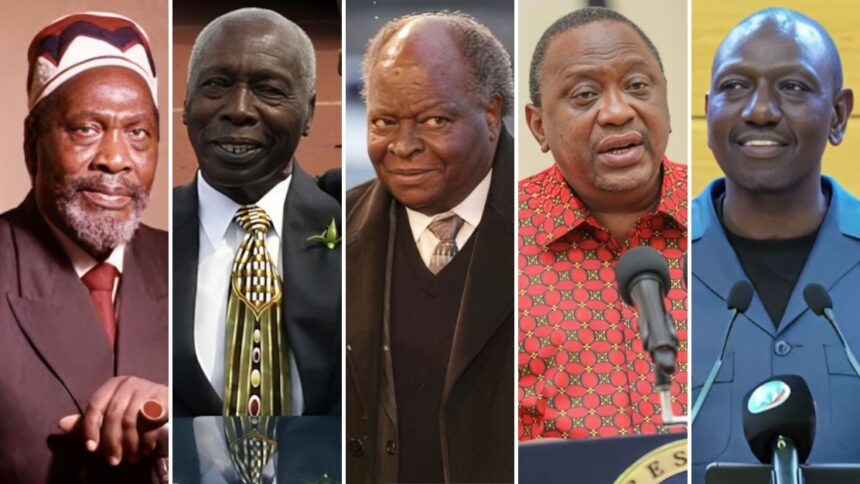
In the landscape of Kenyan politics, leadership styles are often viewed through the prism of historical legacies and mentorship. Uhuru Kenyatta and William Ruto, two prominent figures in Kenya’s political scene, offer distinct leadership approaches shaped by their political backgrounds and the legacies of their mentors.
Uhuru Kenyatta: A Legacy of Patriarchal Leadership
Uhuru Kenyatta, the son of Jomo Kenyatta, Kenya’s first president, inherited a political legacy intertwined with the Gikuyu community’s trust, established during his father’s reign. Jomo Kenyatta’s era was marked by centralized power and a paternalistic approach, where loyalty to the leader was paramount, and the political ethos was “what the leader says, goes.” This legacy influenced Uhuru’s political demeanor, fostering a perception of leadership where authority and decision-making are top-down.
In his tenure as President of Kenya, Uhuru Kenyatta often exemplified a leadership style that echoed his father’s, emphasizing unity and continuity but also exhibiting firm control over his political domain. This was greatly felt in the leadup to the 2022 general elections Uhuru Kenyatta tried to convince the Gikuyu to lean towards Raila Odinga but apparently failed in this. His approach combined traditional values with modern governance, seeking to balance respect for heritage with the demands of a contemporary and diverse nation.
William Ruto: The Influence of Moi’s Iron Grip
William Ruto, on the other hand, is considered a political progeny of Daniel Arap Moi, who led Kenya with an iron fist for over two decades. Moi’s rule was characterized by an authoritarian style, where power was concentrated, and dissent was often met with suppression. Ruto’s political career flourished under Moi’s tutelage, absorbing lessons from his mentor’s governance playbook. These can clearly be seen in how Ruto is clearly arm-twisting the justice system in the various court cases such as against the housing levy.
As a leader, Ruto has demonstrated a mix of Moi’s assertive leadership with a populist approach, engaging directly with the electorate and portraying himself as a champion of the common man. However, his leadership style has also been marked by assertiveness and a strong desire to maintain control and authority within his political sphere, reflecting the influence of Moi’s governance style.
Comparative Analysis of Their Leadership
The contrast between Kenyatta and Ruto’s leadership styles reveals the complex interplay of mentorship, personal experience, and historical context in shaping political leadership in Kenya. While Kenyatta’s approach is often seen as an extension of a dynastic legacy, Ruto’s style is viewed as a product of political apprenticeship under a regime known for its authoritarian leanings.
Both leaders, however, have had to navigate the intricacies of Kenyan politics, a landscape marked by ethnic diversity, political rivalries, and a rapidly changing social fabric. Their leadership reflects a blend of historical influences and their own personal and political journeys.
Mwai Kibaki’s leadership style, which was quite distinct from that of his predecessors Daniel arap Moi and Jomo Kenyatta, played a significant role in his success as the President of Kenya. Here’s how Kibaki’s approach differed from his predecessors and those who have followed him and why it was effective:
- Democratic Reforms: Unlike Moi’s authoritarian regime, Kibaki was more democratic and promoted freedom of expression and media freedom. After taking office in 2002, he worked towards reducing the powers of the presidency and enhancing parliamentary authority, which was a shift from the centralized power structures under Moi and Kenyatta.
- Economic Focus: Kibaki focused intensely on economic stability and growth. He was known for his economic acumen and implemented policies that led to significant growth in Kenya’s economy. Under his leadership, Kenya experienced economic revitalization, with improvements in infrastructure, education, and healthcare. This was a shift from the more politically driven agendas of his predecessors.
- Anti-Corruption Measures: While corruption remained an issue, Kibaki’s administration made efforts to tackle corruption, which was a significant problem during Moi’s tenure. Initiatives like the establishment of the Ethics and Anti-Corruption Commission were steps towards addressing these issues.
- Inclusive Governance: Kibaki’s style was more inclusive compared to the ethnic favoritism that characterized previous regimes. He attempted to create a government that was representative of Kenya’s diverse ethnic groups, moving away from the ethnic-based politics that were prevalent under Moi and Kenyatta.
- Constitutional Reform: One of Kibaki’s major successes was overseeing the promulgation of a new constitution in 2010, which had been a contentious issue for decades. This new constitution aimed to distribute power more evenly and was a significant departure from the past, aiming to lay the groundwork for a more democratic and fair governance system.
Kibaki’s leadership succeeded in part because it marked a clear departure from the past, focusing on governance and economic reforms rather than maintaining power through authoritarian means or ethnic patronage. His pragmatic approach to leadership, emphasizing economic development and political stability, resonated with many Kenyans and contributed to the relative success of his tenure.
The leadership styles of Uhuru Kenyatta and William Ruto exemplify the enduring impact of historical legacies and mentorship in Kenyan politics. Their approaches, shaped by the shadows of their predecessors, continue to influence Kenya’s political narrative, demonstrating the complexities of leadership in a country with a rich and varied political heritage.